

Why Environment Matters for Creative Work
I’ve been reflecting a lot on the relationship between space and creativity, not as an abstract idea, but as something I’ve lived through deeply over the past few years.
For a long time, my art was made in borrowed corners, shared rooms, temporary setups, and whatever little pockets of space were available in the moment. If you’re a creative of any kind, you probably know that dance: adapting, improvising, doing your best with what you have.
Scrappiness is a skill.
It builds resilience, discipline, and resourcefulness.
But over time, I’ve learned something important:
Your creative work can only expand as far as your environment allows it to.
Recently, I moved into a small casita studio, a quiet, bright space that is entirely my own, and almost immediately, everything shifted. Not dramatically, not loudly, but in that subtle, grounded way clarity always arrives:
My nervous system settled.
My focus sharpened.
My ideas felt roomier.
My routines felt easier.
My work felt more intentional.
It reminded me of a truth I had temporarily forgotten:
environment is part of the creative process.
It’s not just the backdrop.
It’s not just where you “happen to be” while you work.
It shapes the quality of your focus, the depth of your thinking, and the energy you bring to your craft.
A supportive environment doesn’t magically do the work for you, but it creates conditions where your best work becomes possible, sustainable, and joyful.
If you’ve been feeling stretched thin or stuck in a creative rut, it might not be your ideas or your motivation. It might simply be that you’ve outgrown the environment you’ve been working in.
Sometimes the most important upgrade isn’t a tool or a technique.
It’s the place you sit down to create.
Here’s to new chapters, new spaces, and the work that can finally breathe because of them.
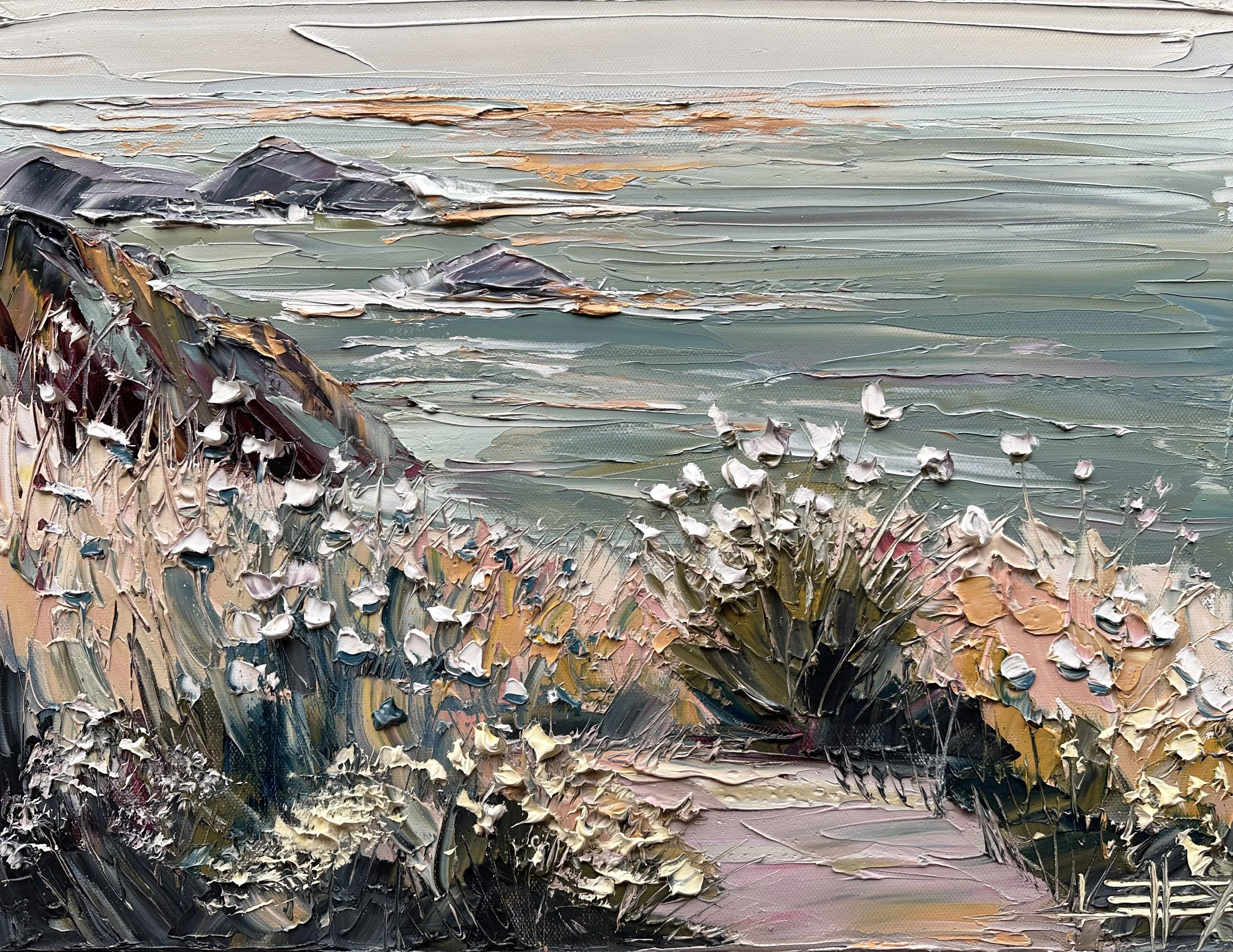
Where the Wildflowers Wait, available exclusively on Ugallery.com